
Understand Your Swing.
Improve With Precision.
A golf swing analysis is a frame-by-frame biomechanical review of your swing, connecting technical faults to physical limitations so you know exactly what to fix and why.
Costa Health delivers this service remotely through Skillest. Record your swing on your phone, upload it from anywhere in the world, and receive detailed video feedback from our coaches and therapists. No clinic visit. No scheduling. Just clear, clinical insight into what your body is doing through the swing.

How It Works
Three steps, no clinic visit
Costa Health's swing analysis runs entirely through Skillest. Upload your footage, receive a biomechanical breakdown, and start improving, all from wherever you play.
Upload Your Swing
Record your swing on your phone and send it through Skillest. Front-on and down-the-line angles work best. No studio, no special equipment, no clinic visit required.
Biomechanical Analysis
We review your footage frame by frame, assessing posture, sequencing, transition mechanics and impact position. Every observation is mapped to its physical cause.
Personalised Feedback
You receive a detailed video response breaking down what your body is doing, why it matters and what to work on. Actionable, specific and grounded in clinical reasoning.
What Costa Health Analyses
Five areas that shape your swing
Setup and posture form the foundation of every swing. Poor address position creates compensations before the club even moves. We examine spine angles, weight distribution and joint alignment at setup to establish whether your body is in a position to rotate efficiently from the start.
Backswing sequencing determines how energy is stored. The order in which your hips, thorax and shoulders rotate during the takeaway directly affects the power available at impact. When segments move out of sequence, the body finds workarounds, and those workarounds cost distance, accuracy or both.
Transition mechanics sit at the heart of the kinematic sequence. The moment the club changes direction from backswing to downswing is where most amateur golfers leak power. A 2016 study published in the Journal of Sports Sciences found that the timing of pelvis-to-thorax separation at transition was the strongest predictor of clubhead speed among mid-handicap players. This is the moment Costa Health scrutinises most closely.
Impact position reveals the cumulative effect of everything that came before it. Shaft lean, face angle and body rotation at the moment of contact are the final output of the kinematic chain. Physical restrictions upstream, such as limited hip internal rotation or thoracic stiffness, surface clearly at impact, even when they're invisible earlier in the swing.
Follow-through and balance tell the story after the ball has gone. An uncontrolled finish, a reverse-C position or an inability to hold the follow-through often indicates deceleration faults or stability deficits that increase injury risk over time. Golfers who can't hold their finish comfortably are typically compensating somewhere.
The Difference
Why biomechanical, not just visual
Most swing analysis stops at what the club and body look like. That approach can identify a fault, but it rarely explains the cause. A golfer told their right elbow flies out at the top will try to pin it, but if the real issue is restricted thoracic rotation, the fix won't stick. The body finds another compensation, and the cycle repeats.
Costa Health's approach starts with the body. Flora, Sarah and our collaborating coaches can analyse and connects visible swing characteristics to the physical restrictions driving them. A steep downswing, for instance, might trace back to limited lead hip internal rotation, something no amount of drill work alone will correct.
This distinction matters because it changes what you practise. Rather than chasing positions, you address the root cause. Golfers who have spent months on the same technical fault often find progress when the underlying mobility or stability deficit is identified and targeted.
The biomechanical lens also flags injury risk before pain arrives. Swing patterns that overload the lumbar spine, such as early extension or reverse spine angle, are common in amateur golfers and directly linked to lower back injury. Catching these early is far simpler than treating the damage later.
Who Is This For?
Golfers anywhere in the world
Costa Health built this service for golfers who don't have access to a TPI-certified clinician locally. Many players on the Costa del Sol use it between in-person appointments. Others connect from the UK, northern Europe or further afield, sending footage from their home course and receiving feedback within days.
Club golfers working on a specific fault benefit from the clinical perspective that a standard lesson can't provide. Competitive players preparing for tournament season use it to fine-tune mechanics and reduce injury risk during heavy training blocks.
Returning from injury is another common scenario. Golfers coming back from back, hip or shoulder problems often develop protective movement patterns that persist long after the pain resolves. Swing analysis identifies these residual compensations and helps rebuild efficient mechanics safely.
No location restrictions
Film your swing at any course, driving range or back garden. All you need is a phone.
Asynchronous feedback
No live session to schedule. Upload when it suits you, receive detailed video feedback within a few days.
Ongoing or one-off
Use it as a single check-in or build a regular review cycle alongside your practice schedule.
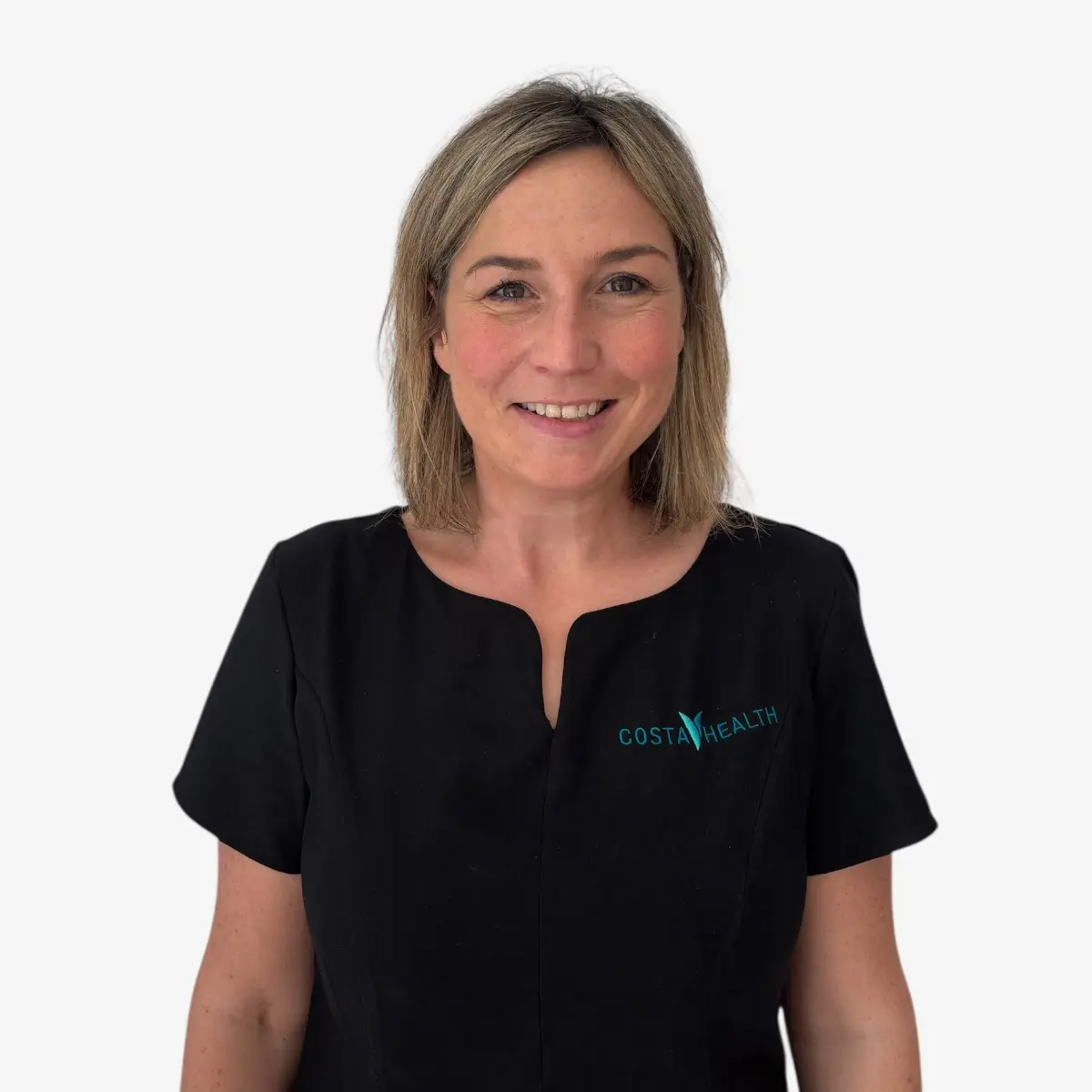
Your Analyst
TPI-certified clinical expertise
Common Questions
Swing analysis FAQs
What is Skillest and how does it work?
What angles should I film for my swing?
How is this different from a lesson with a golf pro?
Do I need to visit a clinic for this service?
Can swing analysis help with pain or injury prevention?
Swing Analysis
Remote service via Skillest
TBC
Pricing to be confirmed. Get in touch for details.
Enquire on WhatsAppReady to Understand Your Swing?
Send us your swing from anywhere in the world. Costa Health's biomechanical analysis connects what you see on video to what your body is actually doing.
Available at Worldwide via Skillest